- Home
- News from us
- Guide
How to build a B2B export website: quote and catalog guide for manufacturers
Learn what international B2B buyers expect on a manufacturer export website: searchable product specs, MOQ rules, multilingual pages and fast RFQ intake.
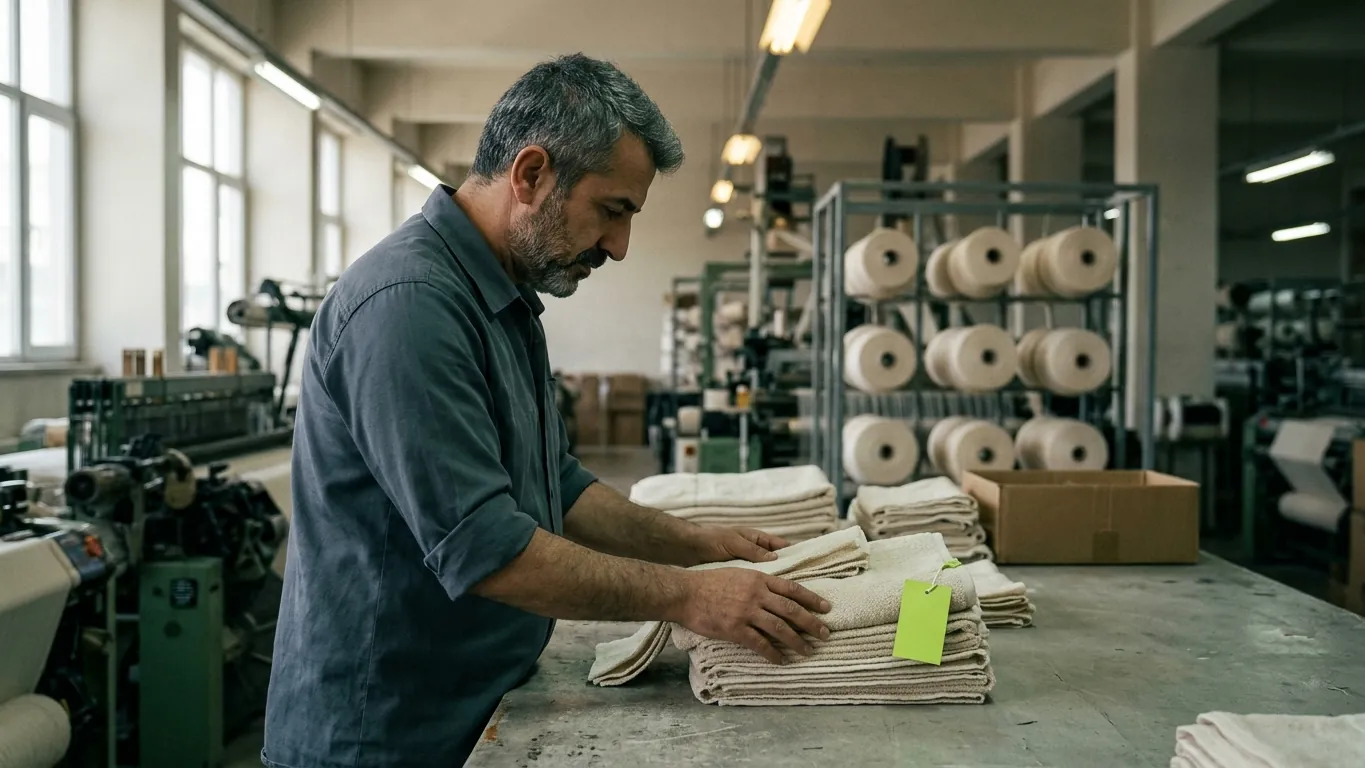
Imagine a procurement director for a European hotel group searching for a textile manufacturer late in the evening. When your site opens, they want answers to three things immediately: what exact specifications you weave, what your minimum order quantity per carton or container is, and how they can send a multi-item quote request. If they meet a slow corporate brochure with broken contact forms or a bulky PDF that fails to open on mobile, they close the tab and move to the next factory. A well-structured B2B export website answers the technical questions upfront and delivers qualified inquiries straight to your desk.
01What is a B2B export website?
A B2B export website is a commercial web platform built for manufacturers and wholesalers to present their product lines, technical specifications, minimum order rules and production capabilities in buyer languages and convert visits into structured quote and sample requests. Instead of pushing an instant credit-card checkout for one item, it guides purchasing managers cleanly toward a proforma invoice and sample brief.
That architecture goes beyond static company photos. Technical spec sheets, GSM or material calculators, localized URL routing and an interactive inquiry list work together so your site operates like a 24-hour export desk.
02How does it differ from a standard corporate website?
Many manufacturer websites follow a generic "About Us, Mission, Contact" template that omits the operational facts foreign buyers require before reaching out. Wholesale procurement follows a completely different checklist from retail shopping.
| Comparison point | Generic corporate site | B2B export website |
|---|---|---|
| Primary focus | Company history and general banners | Technical specs, tolerances and factory standards |
| Catalog format | Static downloadable PDF file | Fast, filterable online SKU catalog |
| Pricing and inquiry | Free-text "Send a message" box | Multi-item quote list with MOQ and carton counts |
| Language structure | Automated browser translation widgets | Dedicated URLs (TR / DE / EN) with clean terminology |
| Buyer intake | Unstructured emails missing quantities | Structured brief with SKU, GSM/size and destination |
| Search and AI | Short vague marketing copy | Clean schema markup, FAQ blocks and extractable tables |
An international buyer should never have to email your sales rep just to learn how many units fit in an export carton, what industrial wash temperature a towel tolerates, or whether custom embroidery is available. Putting those answers beside every product card turns casual visitors into serious inquiries.
03What do international B2B buyers look for first?
Whether you export hotel textiles, food packaging, industrial components or cosmetics, experienced sourcing teams scan for the same six facts:
- Clear category and buyer fit: Within two seconds of loading, visitors should see what you manufacture and which sectors you supply.
- Measurable technical specifications: Weight per square meter (
GSM) and yarn ply in textiles, shelf life and packaging unit in food, or alloy and tolerance grades in machinery. - Minimum order quantity (MOQ) and carton packing: Buyers cannot estimate freight or landed cost without knowing units per box or pallet configuration.
- OEM and Private Label terms: State cleanly from what quantity custom logo weaving, embroidery, packaging or branding begins.
- Verified compliance and test standards: List genuine wash-shrinkage or material durability standards clearly without invented marketing metrics.
- Multi-item quote cart: Let procurement managers add multiple SKUs to one inquiry list rather than submitting separate forms per product.
In our LABONNI Textile showcase built for Denizli hospitality manufacturers, buyers can test 450, 550 or 650 GSM alongside 20/2 double-ply or 16/1 ring yarn in a live GSM studio—seeing single-towel weight (539 g) and 24-piece carton weight (13.7 kg) update instantly—before adding items directly into their wholesale quote list.
04Why are properly localized language editions essential?
Relying on an automated browser translation bar at the top of a website hurts credibility with serious wholesale buyers. Mistranslated technical terms create confusion, and client-side translation widgets do not give Google or AI search engines dedicated URLs in each target language.
Proper multilingual architecture builds native pages for Turkish, English and key regional buyer languages (such as German for DACH hospitality buyers) paired via hreflang tags. You can see a similar four-language implementation in our Dermalanya case study, where every service and guide exists natively across Turkish, English, German and Russian.
05How should the RFQ and sales intake flow work?
Attracting qualified traffic is only half the equation; responding accurately before competitors do closes the export deal.
- Use an inquiry list instead of a blank message box. Buyers add exact SKUs, variants and approximate carton counts into one summary list.
- Unify WhatsApp, email and web requests. Export leads often arrive across personal phones and scattered inboxes; bringing them into one shared workspace separates sample requests, bulk orders and low-priority retail queries.
- Move repeat buyers onto a portal. Once a foreign distributor or regional wholesaler orders regularly, transition them into a password-protected dealer portal for 24/7 self-service ordering.
- Prepare grounded quote drafts faster. In the
/asistansales workspace paired with LABONNI Textile, incoming German WhatsApp messages and English email briefs are analyzed automatically—without inventing unverified pricing or specs—so the team can approve accurate replies quickly.
Explore our transparent setup pricing to see how turnkey manufacturer websites and dedicated portals are scoped without any commission on your revenue.
06Frequently asked questions
Do we have to display public prices on a B2B export website?
No. In export and wholesale trade, unit prices depend on volume, Incoterms and custom Private Label requirements. Showing transparent MOQ rules, carton packing and clear specs paired with a structured RFQ list converts much better than rigid retail price tags.
How many languages should an export site launch with?
Turkish paired with clean, natural English is the essential baseline for global sourcing. If you actively target DACH hospitality buyers or another specific trading bloc, adding a native localized version such as German builds immediate buyer confidence.
Why is an online catalog better than uploading a PDF?
An online web catalog loads quickly on phones, lets buyers filter by SKU or specification, and allows search engines and AI assistants to index every product line. You can still attach a downloadable spec sheet PDF inside individual product pages as secondary support.
Who keeps the domain and product data after launch?
You do. We never take revenue share, and both your domain name and full product/customer database stay in your control with open data export anytime.
Can we keep our existing Google rankings when upgrading an old export site?
Yes. By mapping legacy URLs cleanly with permanent 301 redirects to your new structured product and category pages, search engines transfer existing authority without broken links or lost traffic.